infrastructure
SSEN Transmission uses drone to fit line-rating sensors on live circuit at Kintore
The transmission owner says the installation at Kintore Substation in Aberdeenshire is the first in the UK to clamp Dynamic Line Rating sensors onto an energised conductor by drone, avoiding an outage.
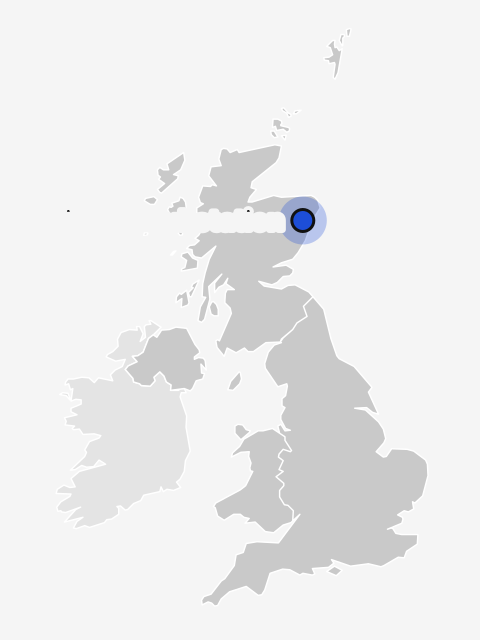
SSEN Transmission has used a drone to clamp Dynamic Line Rating sensors onto a live transmission conductor at Kintore Substation in Aberdeenshire, which the company said is a UK first for the technique.
The sensor is mounted on the drone, flown to the overhead conductor and remotely attached while the circuit stays energised, before the drone returns to the ground. SSEN Transmission said this removes the need for an outage and conventional physical access to the line.
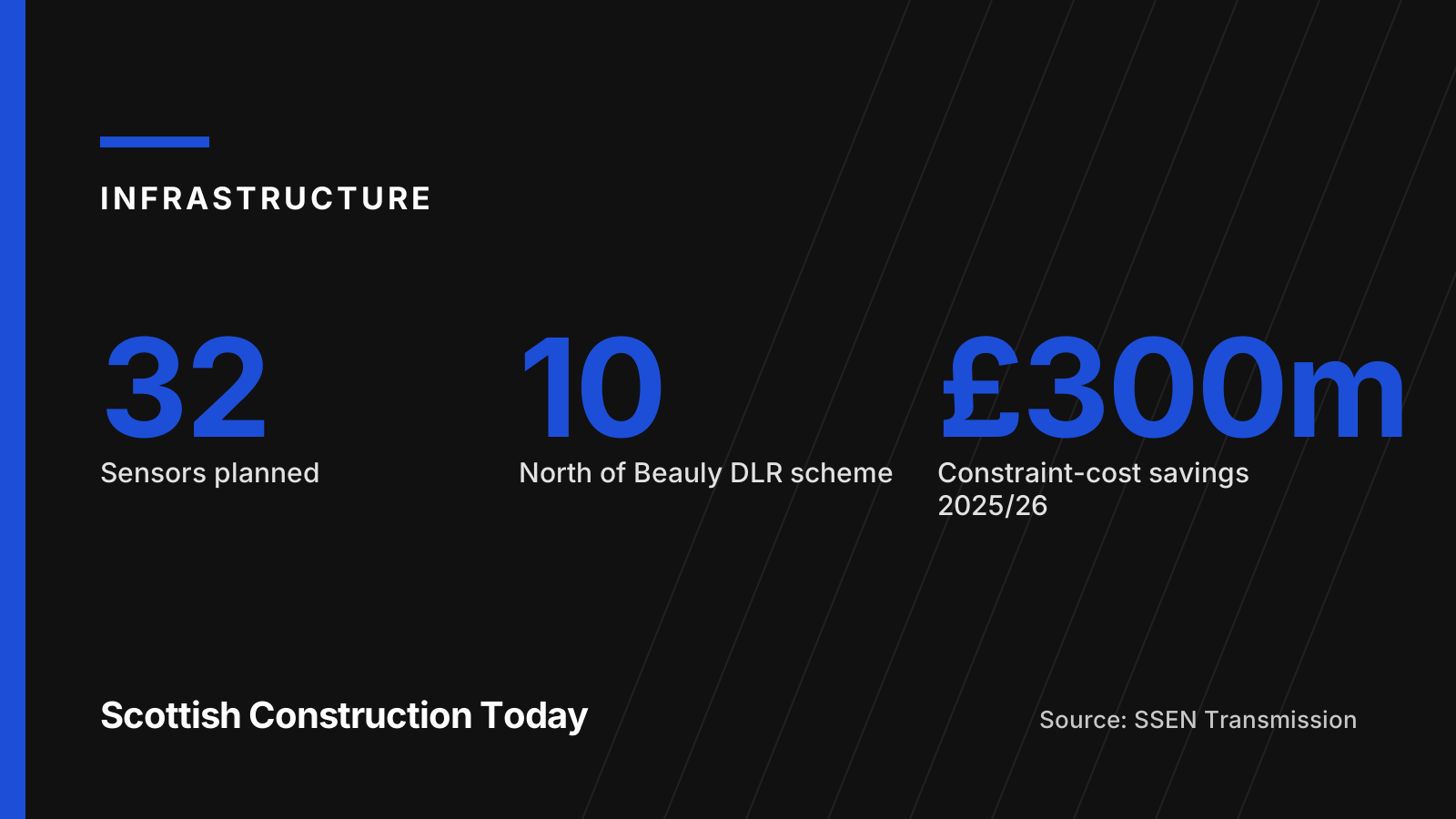
About 32 sensors are planned across two circuits at Kintore, roughly 16 on each, the company said in its announcement on 16 November.
Niall McDonald, SSEN Transmission Project Director, said: "Using a drone to install these sensors while the transmission line remains live means we can deploy Dynamic Line Rating technology without taking that circuit out of service for the installation."
The technology
Dynamic Line Rating (DLR) gives a transmission operator a real-time picture of how much electricity an overhead line can safely carry. SSEN Transmission said traditional ratings rely on fixed seasonal limits based on conservative weather assumptions, whereas DLR uses live temperature and wind data.
The company said that when conditions allow, this lets more electricity flow through the existing network and reduces the need to constrain generators because of network limitations.
In a June 2025 update, SSEN Transmission said the ratings calculated by the system are passed to the National Energy System Operator (NESO), which uses them to balance generation and manage constraints.
Martin Queen, Chief Engineer for Ofgem, the energy regulator, attended the installation. He said: "A live line installation is exceptionally important because it allows us to avoid having system outages, which in a highly constrained system are becoming increasingly difficult to take."
He added that moving to live-line installation should get the systems in place quicker, so consumers see reduced costs sooner.
From platforms to drones
Before the drone method, SSEN Transmission fitted DLR sensors on its first DLR scheme north of Beauly using teams working from mobile elevated work platforms in the field, the company said in March 2025.
That pilot covers 10 circuits between Beauly and Dounreay, on the existing 275kV overhead line circuits from Beauly to Loch Buidhe and Loch Buidhe to Dounreay. By June 2025 the company said it had installed the technology across more than 300km of overhead line, which it described as the largest system of its type in Britain.
In its Kintore announcement, SSEN Transmission said it announced in September that DLR had gone live across the Beauly to Dounreay lines, the first DLR-enabled circuit in its north of Scotland transmission area. At that point, it said, the company was already working towards live-line drone installation at other suitable locations on its network.
Mr McDonald said the drone approach "has the potential to make it easier and more flexible to deploy DLR across our network, helping us make better use of existing capacity and move more renewable electricity through the system."
Constraint costs
SSEN Transmission said that in 2025/26 it delivered nearly £300m in savings for consumers through interventions that reduced network constraint costs. The company said network upgrades will ultimately deliver the greatest increase in capacity, with DLR providing an additional boost by using existing infrastructure more efficiently.
According to SSE plc, the saving was confirmed by NESO and relates to the System Operator: Transmission Owner (SO:TO) Optimisation incentive. SSE said constraint costs arise when the network cannot carry all available power, so some generation, often wind, has to be reduced or switched off.
One example SSE cited was temporary bypass infrastructure at Fetteresso substation in Aberdeenshire, built during a major upgrade there.
The Kintore site
SSEN Transmission describes Kintore 400kV substation as a phased development. Phase 1 was completed in October 2023 to tie in with the network north of Kintore, and Phase 2 is due to energise to 400kV in 2026, according to the company's project page.
SSEN Transmission said DLR forms part of wider work to maximise the capacity and efficiency of its existing network, alongside investment in new and upgraded transmission infrastructure.
Sources
- SSEN Transmission (opens in a new tab) (accessed 2026-11-16)
- SSE plc (opens in a new tab) (accessed 2026-11-16)
- SSEN Transmission (opens in a new tab) (accessed 2026-11-16)
- SSEN Transmission (opens in a new tab) (accessed 2026-11-16)
- SSEN Transmission (opens in a new tab) (accessed 2026-11-16)
- SSEN Transmission (opens in a new tab) (accessed 2026-11-16)
This story was researched from the primary sources above and checked against them before publication. Spotted an error? Tell us and we will correct it promptly.