infrastructure
Coire Glas pumped storage could support 2,880 construction jobs at peak, SSE study finds
An independent study for SSE puts peak construction employment on the Highland pumped storage scheme at 2,880, with 1,180 in Scotland, but the project still awaits Ofgem's final cap and floor decision this autumn.
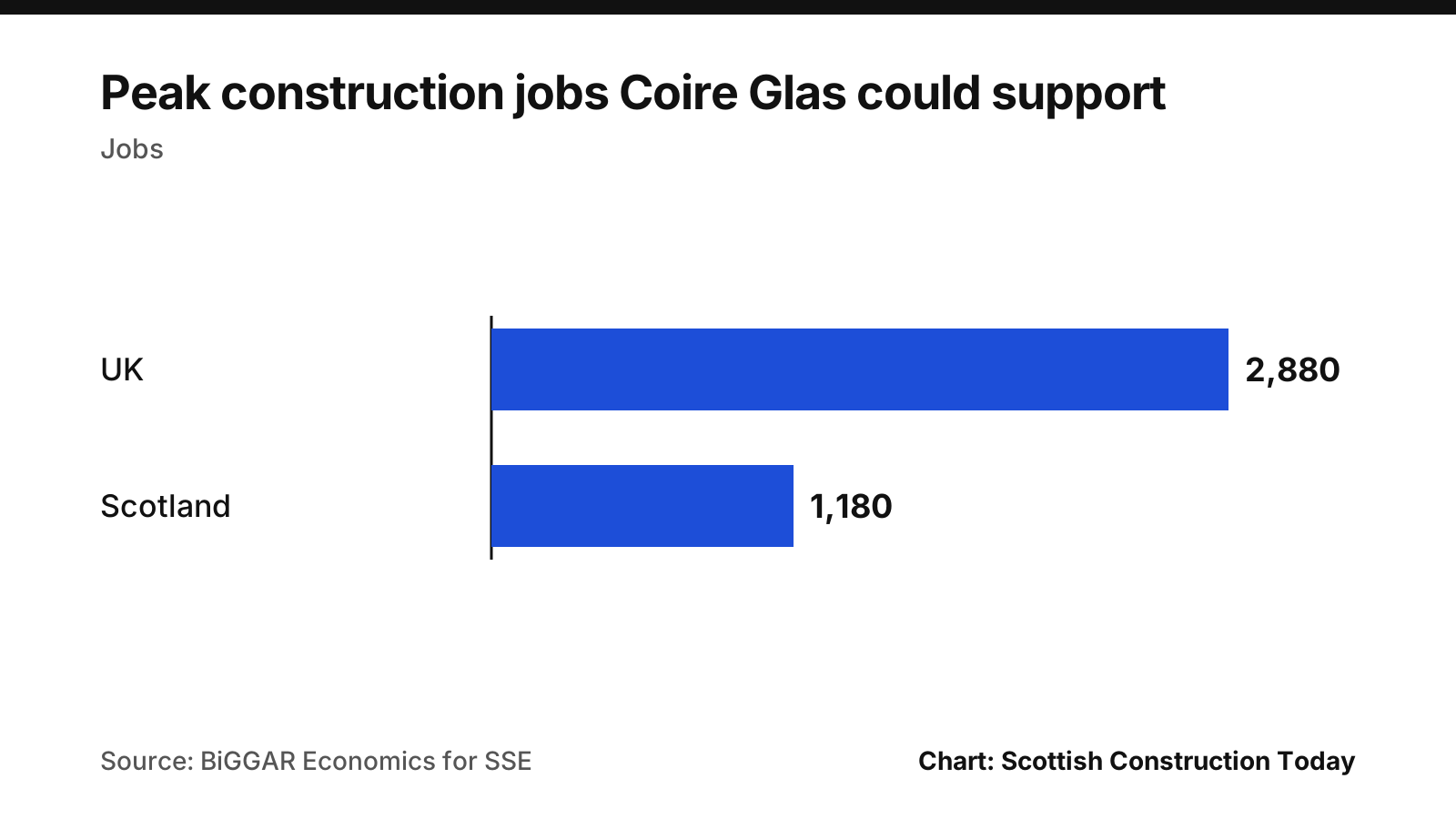
SSE said on 30 October 2026 that building its proposed Coire Glas pumped storage hydro scheme in the Scottish Highlands could support 2,880 construction jobs at peak, according to an independent study by BiGGAR Economics.
The study estimates about £1.94bn would be spent with UK businesses during construction, generating £1.5bn of UK economic value. In Scotland, the project could support 1,180 construction jobs at peak, with £1.35bn of spending with Scottish firms and £656m of economic value.
BiGGAR Economics puts the private capital investment needed at about £3bn, which SSE compares to about two Queensferry Crossings.
Stephen Wheeler, Managing Director, SSE Renewables, said: "Coire Glas has the potential to be one of the most important infrastructure projects built in the UK in a generation."
The figures
| Measure | UK | Scotland |
|---|---|---|
| Construction jobs at peak | 2,880 | 1,180 |
| Spending with businesses | £1.94bn | £1.35bn |
| Economic value | £1.5bn | £656m |
Once operating, BiGGAR Economics says the scheme could support 60 long-term UK jobs a year and £7m of UK economic value annually.
The project
Coire Glas sits on the shores of Loch Lochy in Lochaber, between Fort William and Inverness, according to SSE Renewables. The scheme would pump water from Loch Lochy to an upper reservoir and release it to generate electricity when demand is higher.
SSE describes it as a 1.44GW project and one of Britain's most advanced pumped storage hydro schemes. SSE Renewables' project page gives a proposed maximum generation capacity of 1,440MW and a maximum pumping capacity of 1,500MW.
The project was first approved as a 600MW scheme in December 2013. The Scottish Government granted consent for a revised scheme in October 2020, capable of a power output of up to 1,500MW for 24 hours non-stop, SSE Renewables said at the time.
SSE said it has already invested more than £100m in developing the project, including site investigations and a 1.2km exploratory tunnel to inform the final design. In March 2023 it announced a £100m investment in what it called Britain's biggest pumped hydro storage scheme in 40 years.
In August 2025 Coire Glas was awarded Gold certification under the Hydropower Sustainability Standard, which SSE Renewables said made it the first pumped storage hydropower project in the world to achieve the recognition.
The Ofgem process
SSE said realising the projected benefits depends on Coire Glas securing an investible outcome through Ofgem's Long Duration Electricity Storage (LDES) framework.
Wheeler said: "A number of detailed arrangements need to be resolved to secure an investable outcome so a project of this scale and complexity can progress."
In June 2026 Ofgem included Coire Glas as one of 16 LDES projects on its minded-to decision list for cap and floor investment support. The regulator's consultation on those minded-to decisions closed on 14 August 2026, and Ofgem said it expects to publish a final decision later in autumn 2026.
Ofgem said the cap and floor scheme was introduced to support investment in long duration storage technologies. Under the regime, it sets a minimum and a maximum on how much a company can earn from an LDES project. If revenue falls below the floor, consumers top up the difference through a charge on energy bills; money earned above the cap goes back to consumers through reductions in network charges.
When Ofgem opened the first application window in April 2025, it gave an indicative capacity range of 2.7GW to 7.7GW and said it expected the first batch of projects to be agreed in the second quarter of 2026. Ofgem said at the time that Great Britain had four pumped storage hydro facilities, in Scotland and Wales.
Timetable
SSE's stated timetable has moved since 2023. In March that year the company said it hoped to make a final investment decision in 2024 and to fully construct and commission the scheme by 2031.
SSE Renewables' project page now says the scheme could be delivering flexibility to Great Britain's electricity system in the 2030s, subject to a final investment decision, and that the company is assessing the outcome of Ofgem's minded-to decision.
SSE said it continues to engage with Ofgem's process, with a significant number of points of detail still to be resolved. Any final investment decision would be taken in line with its focus on capital discipline and strict adherence to its return thresholds, the company said.
Ofgem's final decision on which projects receive cap and floor support is due later in autumn 2026.
Sources
- SSE (opens in a new tab) (accessed 2026-10-31)
- SSE Renewables (opens in a new tab) (accessed 2026-10-31)
- Ofgem (opens in a new tab) (accessed 2026-10-31)
- Ofgem (opens in a new tab) (accessed 2026-10-31)
- Ofgem (opens in a new tab) (accessed 2026-10-31)
- SSE Renewables (opens in a new tab) (accessed 2026-10-31)
- SSE (opens in a new tab) (accessed 2026-10-31)
- SSE Renewables (opens in a new tab) (accessed 2026-10-31)
This story was researched from the primary sources above and checked against them before publication. Spotted an error? Tell us and we will correct it promptly.